
A few days ago we were talking about the Carton coffins. Today we'll do it from the cardboard cribs. And it is that cardboard is such a necessary and useful element that it is part of our lives from birth to death.
In the middle of the last century, a project was carried out in Finland distribute cardboard cribs to all pregnant women with the aim of reducing infant mortality. For 75 years, pregnant women in Finland have received cardboard boxes. The box contains a package of clothes, sheets and toys and in turn the box can be used as a crib. It has been said that this policy has helped make the Nordic country one of the nations with the lowest infant mortality rate in the world.
This gift began to be distributed in 1938 and, at first, was only for low-income families. This changed in 1949 when began to be distributed to all future mothers. To obtain the box it was mandatory to be visited by a doctor and attend a public prenatal clinic before four months of pregnancy.
In the 1930s, Finland was a very poor country with a high infant mortality rate. It prevented babies from sleeping in their parents’ bed, causing many deaths. Mortality data improved markedly from the distribution of cardboard box and mandatory prenatal care in the 1940s, as well as a social security system that was implemented in the 1960s.
Eighty years later, Finland is one of the countries with the lowest infant mortality rate. the prenatal box is completely institutionalizeda, and this is something that unites many generations of women.

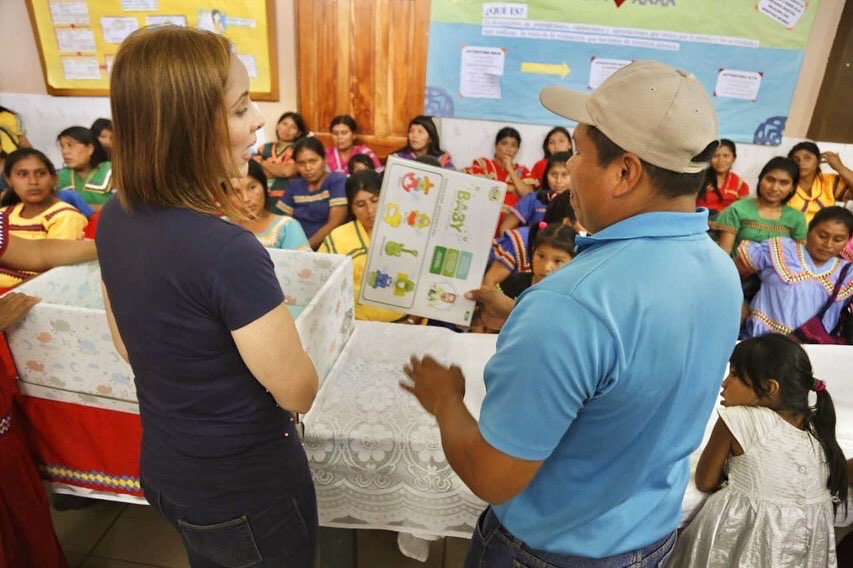
Recently, Panama's first lady, Yazmín Colón de Cortizo, visited the communities of Soloy and Hato Chamí in the Central American country to launch the Cardboard Cradle project, modeled on the one started in Finland 80 years ago. "Through the project," the first lady said at the presentation of the first boxes, "mothers have been trained to provide the best care for their babies. We are deeply committed to early childhood, and we are working to provide the tools needed to support our children's healthy development." On social media, the first lady explained why she was promoting the project:
“The model developed in Finland seeks to reduce gaps in inequality and infant mortality by providing a comfortable and safe place for the newborn.”
One of the objectives of distributing these cardboard boxes is to help reduce a specific cause of death in babies: Sudden Infant Death Syndrome (SIDS), also known as “sudden death”, which Causes Unexpected and Unexplained Death of a Newborn seemingly healthy.
In Finland the distribution of cardboard boxes is made to all pregnant women Regardless of the social class to which they belong, the same is planned in Panama. However, the Cuna de Carton project has received a lot of criticism through social networks.