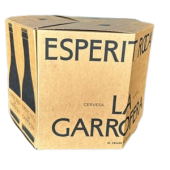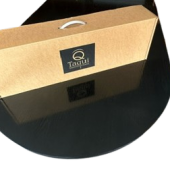

The 12th version of the FEFCO Code reflects developments in the industry sector of the corrugated cardboard, new technologies, market changes and more than a hundred new designs, including a new series related to retail and e-commerce.
Many of the models of cardboard boxes They can also be classified in other groups of basic models under a specific number in FEFCO code.
Basic groups of FEFCO models
The most popular and cost-effective box styles can be generated in a matter of minutes to suit your design. If you are looking for a different style of box, there are hundreds to choose from. Our technical team of packaging and packaging specialists can advise on any doubts arising when packing new products.
Once the budget has been received, we contact the customer to collect all the information necessary to carry out the packaging project.
01 – Commercial rolls and sheets
Rolls of corrugated cardboard and unwrought sheets.
02 – Slotted-type boxes
They consist basically of a piece with glued, sewn or glued manufacturing joints with top and bottom tape and flaps. They are shipped extended in a plane, ready for use and closed using the upper and lower flaps.
03 – Telescopic boxes
Made of more than one piece, they are characterized by a lid and/or background that slides over the body of the box.
04 – Folding boxes and trays
Folding boxes and corrugated cardboard trays are generally of a single piece. The bottom of the box folds to form two, or all side walls, and the lid. Closing elements, handles, display panels, etc. can be incorporated into the design.
05 – Slide-type boxes
They consist of several pieces of inner linings and sheaths that slide in different directions within each other. This group also includes exterior covers for other boxes.
06 – Rigid boxes
Formed of two separate pieces, for ends and a body; they require a staple or similar operation before they can be used.
07 – Ready-glued boxes
They are usually made of a single piece, delivered extended in a plane or folded and ready for use by means of a simple assembly.
09 – Interior fitments
Linings, reinforcements, lockers, interior divisions, whether they fit a box model or loose parts. The number of parts of the interior conditioners shown is arbitrary and can be increased or decreased according to needs.

Useful tips for measuring your packaging
Unless otherwise specified, all dimensions are internal dimensions in millimetres, as shown below:
Length ( L ) x Width ( W ) x Height ( H )
- Long ( L ) = dimension from left to right (usually the longest dimension in the opening)
- Width ( W ) = dimension from front to back (usually the shortest dimension in the opening)
- Height ( H ) = top to bottom (the dimension from the top of the opening to the base)
The L, W, H dimensions are specified in each description of the box design, for some models the numeric value of W may exceed the numeric value of L.