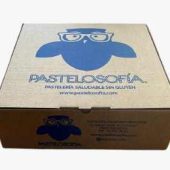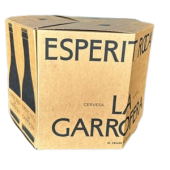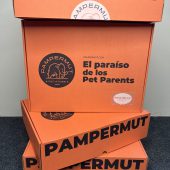

According to data provided by the Spanish Association of Corrugated Cardboard Packaging and Packaging Manufacturers (AFCO), in 2019 the production of corrugated cardboard in Spain grew by 4,4 %, reaching 5,529 M m2. These figures have reached seven consecutive years of growth. Invoicing reached 3,150 M€, 3.9 % more than the previous year. And everything points to the fact that by 2020 these figures will be exceeded.
The corrugated cardboard industry has faced the crisis caused by the Covid19 taking advantage of its great versatility and sustainability to offer solutions to the huge amount of goods that move around the world and the need for new solutions to new problems.

Examples include products such as cardboard dividers to ensure separation at workstations and production lines; supplies of disposable boxes and trays for delivering medical supplies, food or essential goods to soup kitchens, hospitals or care homes for older people; wastepaper bins, side tables, trunks, shelves for storing clothing or personal belongings, and cardboard partition panels in the field hospitals created to respond at the worst moments of the crisis. It is also a renewable material suitable for ensuring hygiene to help prevent new infections.
In June of this year, 2020, the Council of Ministers launched the preliminary draft of the new Law on Waste and Contaminated Land, which forms a package with the Spanish Circular Economy Strategy (EEEC) ‘Circular Spain 2030’. The new law focuses on measures designed to drastically reduce the volume of waste generated by economic activity. With this and other initiatives, waste is expected to decrease by 15% by 2030 compared with 2010. The introduction of a tax on non-reusable plastic packaging is particularly striking. This levy will give a competitive advantage to sustainable materials such as paper and cardboard, positioning them as the main beneficiaries of the new legislative package thanks to their long-established sustainability and recycling credentials.