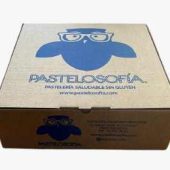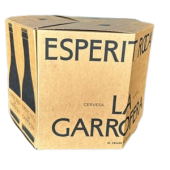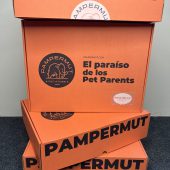

The Institute for Sustainable Production conducted a comparative study between corrugated cardboard containers and reusable plastic for the international transport of fruits and vegetables to the main European countries, a key sector in which, let us remember, Spain is a leader in Europe.
The study compares the carbon footprints of corrugated cardboard boxes and plastic to determine their relative sustainability, taking into account manufacturing, all transport-related subprocesses and other stages of their life cycles; measuring and calculating CO2-equivalent emissions at each stage; and assessing how factors such as distance, the packaging's final treatment and the number of uses influence the results, with the corresponding sensitivity analyses.
When we quantify the sustainability of a container and its environmental impact, the corrugated cardboard container appears as clear winner.

Among the conclusions of the work, it is explained that the use of cardboard boxes instead of plastic boxes in the vegetable export involves savings of CO2 in figures ranging from a minimum of 25% for the extreme case of 50 rotations in the use of plastic boxes, and a maximum saving of close to 50% in the most frequent case of reuse of the plastic box, 20 times.
Plastic is obtained through a non-renewable material, oil, while corrugated cardboard comes from recycled paper and wood, which stand out as biological, renewable, recyclable and biodegradable elements. Plastics take a long time to degrade, on most occasions forming microplastics that increasingly pollute our seas and oceans.
It would be sufficient to observe the legislation in Spain, in which the Waste Law defines since 2011 as sustainable packaging of ‘made from renewable, recyclable and biodegradable raw materials’, explicitly citing examples of paper and corrugated cardboard.
In this regard, international legislation has already begun to put limits on the unbridled use of plastic in our daily lives. This does not mean that some of these plastic materials are not necessary for certain uses, but it is time to choose, when we should appeal to responsibility and bet on more ecological alternative materials such as corrugated cardboard boxes.