
Taking advantage that the Polytechnic University of Valencia developed a "Comparative study of the carbon footprint of agricultural packaging used for international transport of fruit and vegetable products by road» Last June, from FxSanmartí we want to contribute our grain of sand in the struggle to reduce the environmental impact derived from economic activities.
The well-known journalist scientific divulgator Manuel Toharia publicly presented this work and underlined the advantages the environment of cardboard boxes because of their renewable, biodegradable and recyclable character.
Its conclusions and comments on the importance of hygiene and safety provided by agricultural cartons have been well received in the specialized press and have been widely distributed in regional newspaper headlines where agriculture is of particular relevance.
What is the best packaging for transport of fruit and vegetables by land?
- Boxes for fruit and vegetables: CARBON HONEY
- Boxes for fruit and vegetables: USE AND ROTURES
- Fruit and vegetable boxes: HYGIENE AND POLLUTION
- Boxes for fruit and vegetables: PRICES

Cardboard boxes vs. Reusable Plastic Boxes: Carbon Footprint
The study referred to in the heading, led by Salvador Capuz, Professor of Engineering Projects at the Polytechnic University of Valencia, was commissioned by the Institute for Sustainable Production (IPS). It concludes that using corrugated cardboard packaging to transport fruit and vegetables produces fewer CO2 emissions than reusable plastic crates, making it more beneficial in the fight against climate change, one of the objectives of the new legislation based on the 3Rs – Reduce, Recycle, Reuse.
The study states that cardboard boxes generate up to almost 70% (69.22%) less CO2 emissions than reusable plastic folding boxes in the export of fruit and vegetables.
The study analyses the transport of selected fruit and vegetable producers, representing the transport of 1,875 million tonnes per year to central Europe, in particular to France and Germany.
It should be recalled that the head of the study, the Institute for Sustainable Production (IPS), is a non-profit entity that promotes a business culture of sustainability.
If the exports analysed in the study had been packaged in corrugated cardboard boxes, they would save up to 70,000 tons of CO2, which is equivalent to removing almost 50,000 vehicles from circulation.

Cardboard boxes vs. Reusable Plastic Boxes: Use and Breaks
Following the factors analyzed in the study, single-use corrugated cardboard boxes have a break rate of 0.1%, i.e. 1 box with use defect per 1000 units, while for reusable plastic boxes with an average life of 20 uses the index rises to 1%, one in 100.
Six fruit and vegetable products have been selected as export representative –tomato, eggplant, zucchini, melon, cucumber and pepper– and two export destinations located at 1,500 km (France), and 2,500 km (Germany).
For this comparison, the factors affecting climate change are analysed and compares the carbon footprint of different corrugated cardboard and reusable plastic boxesby selecting single-use corrugated cardboard boxes and reusable plastic boxes with an average life of 20 uses.
corrugated cardboard boxes gain weight in the battle against climate change
Cardboard boxes are recycled immediately after use, while reusable plastic boxes can become a problem if we are talking about thousands and want to get rid of them.
The cardboard boxes for fruits and vegetables are ideal for reuse in the kitchen for organic garbage.
Cardboard boxes vs. Reusable Plastic Boxes: Hygiene and Pollution
We would like to recall a study recently published by the University of Bologna which has been directed by Rosalba LanciottiProfessor of the Department of Food and Agriculture Sciences, which shows that corrugated cardboard boxes reduce contamination of fresh products by pathogenic and rotting microorganisms by approximately 3 days on average.
In the face of reusable plastic packaging, the use of the corrugated cardboard container allows for three more days of freshness and safety in fruit and vegetables.
The advantage of cardboard box for transport of fruits and vegetables In this respect, it is twofold: it reduces the risk of getting diseases transmitted by bad food and helps to improve the effectiveness in product waste.
Decomposition was found to occur between 48 and 72 hours earlier in reusable plastic boxes. The corrugated cardboard is safer and guarantees greater microbial hygiene, aroma, taste and freshness of the food.

Cardboard boxes vs. Reusable Plastic Boxes: Prices
With the data we have in hand the efficiency in durability offered by plastic boxes is diminished due to the much higher breakage rate that plastic boxes have when used, stored and used again on up to 20 occasions.
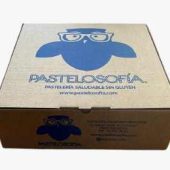
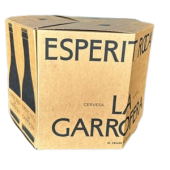
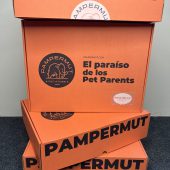
FxSanmarti manufactures cardboard boxes in a self-assembly tray format ideal for storage, as they can be stacked. They are used for fruit and vegetables that do not need to be enclosed in boxes and are delivered flat to take up less space. They can be customized with company information, and our inks meet all compostability requirements.
Our technical team of specialists in packaging and cardboard box design can advise on all those doubts arising when packing their fruit and vegetable products for export.

Once your request has been received, we contact you to collect all the information necessary to manufacture your cardboard boxes in large quantities for the transport of fruit and vegetables at the best possible price. We adapt our production processes to achieve competitive prices and immediate deliveries.